
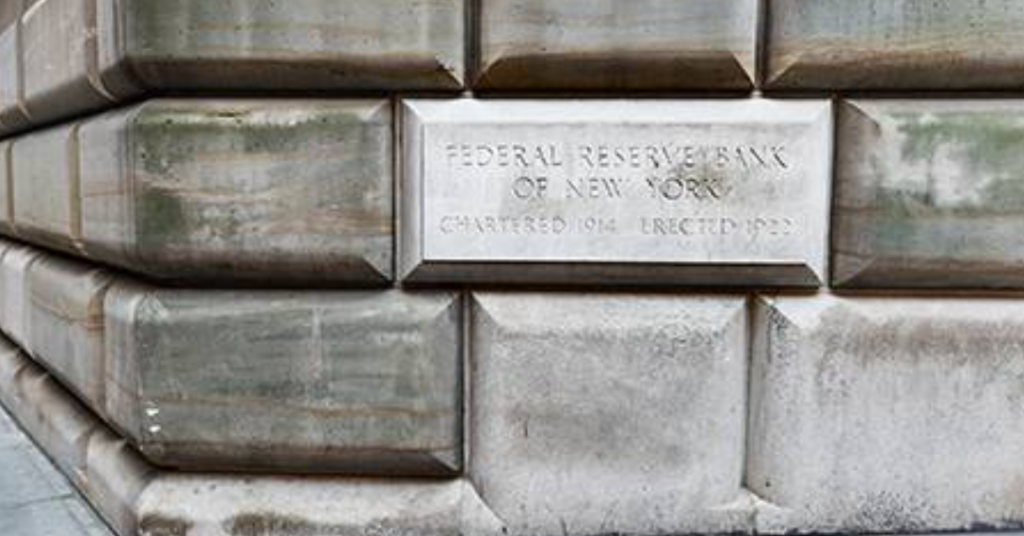
The US Federal Reserve is preparing to enter a new phase after former governor Kevin Warsh secured a narrow and deeply divisive Senate confirmation vote of 54 to 45, succeeding Jerome Powell as chairman of the central bank.
Warsh is considered a close ally of US President Donald Trump and now faces a difficult task that requires balancing complex policies and conflicting objectives, while coming under intense pressure from Trump to cut interest rates despite rising inflation, partly driven by higher oil prices.
Oil prices climbed again on Monday following a sharp warning from Trump directed at Iran, after reports emerged of attacks targeting ships and infrastructure in the Gulf, reigniting fears of renewed fighting in the Middle East.
Brent crude futures for July delivery rose 1.5% to $110.72 per barrel by 7:25 a.m. Eastern Time, while US West Texas Intermediate crude gained 1.3% to $106.81 per barrel.
Trump has made it clear that Warsh’s appointment was intended to secure a more accommodative monetary policy. However, persistently elevated inflation data, combined with possible resistance from other Federal Reserve governors, may limit Warsh’s ability to deliver on the president’s wishes.
Trump wants rapid interest rate cuts to strongly stimulate investment and economic growth. Since December, the Federal Reserve has kept interest rates unchanged between 3.5% and 3.75%, a level officials view as slightly restrictive for economic activity.
However, the consumer price index rose 3.8% year-over-year in April, driven by geopolitical tensions in the Gulf and the implementation of tariffs. As a result, futures markets have completely ruled out the possibility of rate cuts during 2026, while some analysts now expect the next move to be a rate hike.
Warsh is also likely to face opposition from other officials within the central bank. Jerome Powell has decided to remain a member of the Board of Governors, making him a counterweight to any potential political interference.
During recent meetings, four policymakers dissented from official decisions, with three of them explicitly pushing to remove any language suggesting future rate cuts remained possible.
Some hawkish members are already demanding that the Federal Reserve clearly state that additional rate hikes remain on the table, placing Warsh under major pressure ahead of his closely watched first appearance in June.
If the new Federal Reserve chairman is still looking for what he once described as a “good family argument” over monetary policy, he is likely to find one if he maintains his pro-rate-cut stance.
With inflation accelerating and Treasury yields rising, Warsh will face a Federal Open Market Committee that appears unwilling to ease monetary policy. In fact, several officials recently stressed the importance of keeping the option of rate hikes alive.
If former governor Stephen Miran appeared isolated when he called for rate cuts, then an attempt by the Federal Reserve chairman himself to challenge the broader policymaking body and push for easing would attract even greater attention.
Observers who have followed Warsh for years, from his time as a governor to his later public criticism of central bank policies, believe he will strongly advocate for lower interest rates. However, they argue his core problem is that he may lose that debate, at least in the short term, creating significant communication challenges with markets.
“I saw him at work,” said Loretta Mester, former president of the Cleveland Federal Reserve, who previously worked with Warsh. “He based his decisions on his view of the economy, and even his arguments in favor of lower rates were tied to his interpretation of structural changes in the economy.”
“But I don’t think he can convincingly make those arguments right now because we have a real inflation problem,” she added.
Elevated inflation is expected to become the first and biggest political challenge facing Warsh.
Officially, Warsh has embraced the Trump administration’s narrative that the current wave of price increases is temporary and will fade once the Iran conflict ends and other disinflationary forces such as productivity improvements return.
However, these arguments are now facing a far more skeptical audience, particularly as inflation has climbed to its highest levels in years.
Warsh used the phrase “family disagreement” during his Senate confirmation hearing, a remark that many central bank watchers believe could later haunt him, alongside his previous sharp criticism of the Federal Reserve.
Sharp divisions inside the Federal Reserve
At the latest Federal Open Market Committee meeting in late April, three members voted against the official policy statement.
The disagreement centered on a sentence interpreted as signaling that the next move could be a rate cut, stating that the committee “will carefully assess incoming data, the evolving outlook, and the balance of risks when considering the extent and timing of any additional adjustments to the target range.”
However, this very disagreement may offer Warsh an opportunity to quickly leave his mark on the central bank by persuading other members to remove such language, in line with his repeated criticism of so-called “forward guidance,” while preserving flexibility for future policy options.
“There’s a lot of independent thinking within the committee,” said Lou Crandall, chief economist at Wrightson ICAP. “Kevin Warsh is fortunate to have significant experience, and family disagreements often lead to constructive outcomes.”
“He can frame this not as monetary tightening, but as a shift toward a more neutral communication approach,” he added.
A possible confrontation with Trump
But Warsh’s problems are unlikely to end there.
Trump clearly nominated him because he wants lower interest rates. If Warsh fails to deliver that outcome, the tense relationship previously seen between Trump and Jerome Powell could reemerge, including personal attacks and an unprecedented clash between the White House and the central bank.
Even so, people familiar with the committee’s internal workings believe Warsh is unlikely to emerge from meetings saying he tried to cut rates but failed to convince other members, as doing so would undermine his authority as chairman.
“Part of the chairman’s job is building consensus within the committee,” Loretta Mester said.
She added that previous Federal Reserve chairs such as Ben Bernanke, Janet Yellen, and Jerome Powell regularly communicated with members ahead of meetings to gauge their positions in advance, explaining that “consensus-building is a core part of how the committee functions.”
Additional communication challenges
Beyond the battle over interest rates, Warsh faces additional challenges related to how the Federal Reserve communicates with markets.
He has previously criticized not only forward guidance, but also the “dot plot” showing officials’ interest rate expectations, while also expressing reservations about holding a press conference after every meeting — a practice introduced by Jerome Powell instead of limiting conferences to quarterly appearances.
Bill English, the Federal Reserve’s former head of monetary affairs and now an economics professor at Yale University, said he worked with Warsh and considers him “good at dealing with people,” adding that he expects him to seek “reasonable consensus” on key issues.
“From my experience with him when he was a governor, he doesn’t strike me as someone who wants to fight the committee,” English said. “I think he’ll try to lead through consensus-building and gradually move the committee through arguments and economic data.”